TREATMENTS
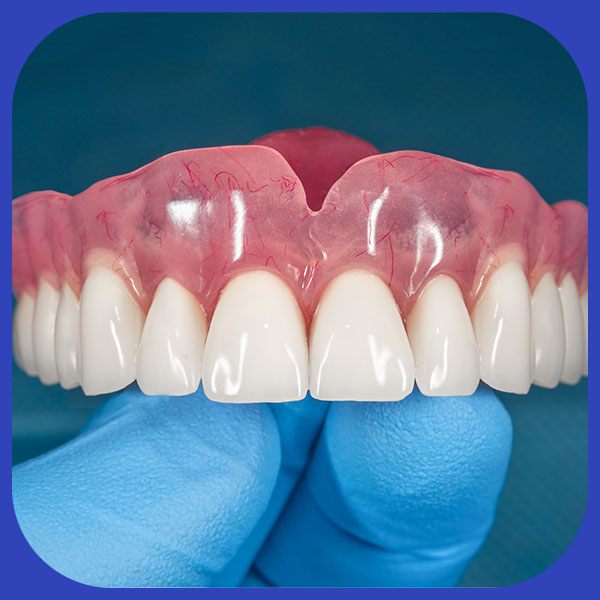
What is partial or complete dental prosthesis?
Whether replacing an extensive filling by strengthening the tooth (crown) or replacing a missing tooth (bridge), digital impression technology allows us to offer you the type of treatment that will be best suited to your situation.
From the virtually indestructible zirconia crown (white and metal-free) to the must-have gold crown, you'll have access to everything in the field of dentures. The use of composite resin (white filling) or porcelain (veneers, crowns), as the case may be, can allow the dentist to restore a natural appearance to your smile by correcting the defects that you initially perceive. To do this, we use a computer-assisted color choice system to meet the highest aesthetic standards.
Tooth Crown
Commonly used in dentistry, the dental crown is a prosthesis that envelops a tooth, mainly to protect it and extend its life. Indeed, it is a fixed prosthesis that can restore a damaged tooth or to protect it.
The dental crown is used to reconstruct a tooth in order to ensure its function, shape and aesthetics. It also helps protect against a risk of fracture or increased decay. Dental crowns can be used to replace a single tooth or to serve as a bridge.
The lifespan of a dental crown varies considerably. This type of dental treatment is in theory given for 10 years but a quality restoration will allow, if the patient maintains impeccable hygiene, to last 30 or 40 years, or even a lifetime. Important elements affect the life of a crown including the quality of the dentist, the prosthetist or the materials used.
DURATION OF TREATMENT: A single session lasts an average of one hour. The whole treatment takes about a week.
ACCOMMODATION
HOSPITAL STAYING
OPERATION DURATION
ANESTHESIA
RETURN TO WORK
FOLLOW UP VISIT
Ceramical Dental Crown
In general, a dental crown is a prosthesis making it possible to cover a damaged or devitalized tooth or to restore a natural aesthetic to the mouth. In other words, a dental crown is a coping that serves the remaining part of the tooth to consolidate it and restore the shape and function of the tooth. To rebuild your teeth, there are different types of crowns.
Ceramic dental crowns make it possible to find a functional and aesthetic tooth. In recent years, ceramic materials and laboratory techniques have evolved and it is now possible to manufacture all-ceramic crowns. This material marked a great evolution in dentistry due to its color and its translucency which harmonize with those of natural teeth: ceramic allows light to pass through for a very natural result. It looks like tooth enamel.
The all-ceramic crown is designed without a metal framework (as is the case with the all-metal crown). The ceramic framework is translucent and allows light to flow throughout the crown similar to a natural tooth.
The all-ceramic or all-ceramic crown therefore has a much better aesthetic rendering. The color of the cosmetic ceramic is chosen depending on the color of the neighboring teeth. In addition, it is perfectly well tolerated by the gum tissue. Ceramic is a highly biocompatible material. This is an additional advantage for the integration of this type of crown in the mouth.
DURATION OF TREATMENT: A single session lasts an average of one hour. The whole treatment takes about a week.
ACCOMMODATION
HOSPITAL STAYING
OPERATION DURATION
ANESTHESIA
RETURN TO WORK
FOLLOW UP VISIT
Zirconia Dental Crown
In general, a dental crown is a prosthesis making it possible to cover a damaged or devitalized tooth or to restore a natural aesthetic to the mouth. To rebuild your teeth, there are different types of crowns.
As the name suggests, the zirconia crown does not contain metal. Indeed, the zirconia dental crown is a prosthesis made from zirconium oxide. Possessing many qualities, zirconia crowns are increasingly appreciated by patients. You will therefore not be surprised to see a border with the removal of the gums. Aesthetically, this Zirconia crown has a clear advantage compared to the ceramic-metallic crown.
DURATION OF TREATMENT: A single session lasts an average of one hour. The whole treatment takes about a week.
ACCOMMODATION
HOSPITAL STAYING
OPERATION DURATION
ANESTHESIA
RETURN TO WORK
FOLLOW UP VISIT
Transitional Dental Prosthesis
If teeth are extracted due to cavities or gum disease and permanent dentures will be fitted, your dentist may suggest provisional or "transitional" dentures. These are prostheses that you can wear immediately after extraction and for two to three months afterwards. Indeed, the transitional prosthesis is made before the extraction of the teeth and thus allows faster healing. The great benefit of this type of prosthesis is the fact that it is possible to have a transitional prosthesis without waiting for the end of the healing period. This allows you to keep the aesthetics of a complete dentition before placing your permanent prosthesis in the mouth since the transitional prosthesis is temporary. The basic material for the transitional prosthesis which is acrylic is the same for any type of prosthesis. However, it is the way of cooking that accentuates its precision in the mouth once the prosthesis is finished. The quality of the teeth is also different depending on the degree of precision of the prosthesis. The use of dense composite teeth which wear out much less quickly than plastic teeth makes it much more comfortable to use.
In addition, the transitional prosthesis also makes the healing of your gum tissue more uniform and facilitates adaptation to your final prosthesis. They can be especially useful for people with a history of sensitive teeth and gums, as the patient does not need to be toothless while the area heals. So the other teeth sensitive people experience less pressure when chewing food.
Temporary dentures are made using essentially the same technique as a permanent denture, but because they are made before any surgery, it is not possible to know exactly how your mouth will look after tooth extraction.
Temporary prostheses offer several advantages. The main advantage is that you won't have to go out in public with a toothless mouth after your teeth have been extracted. A temporary prosthesis is placed the same day the teeth are extracted so that it serves as a dressing to prevent bleeding and protect the gums. In addition, with these prostheses, you can start practicing speaking with dentures right away. Temporary prostheses are not suitable for everyone. It is also possible that your dentist does not recommend them because of your general health or your oral health.
As the name suggests, provisional prostheses should only be viewed as a temporary solution until the permanent prostheses are ready. Temporary and permanent dentures may take a little getting used to.
Finally, if you already have a partial denture, it is also possible to use it as a transitional denture by adding the teeth to be extracted.
DURATION OF TREATMENT: You can wear your prosthesis immediately after tooth extraction.
ACCOMMODATION
HOSPITAL STAYING
OPERATION DURATION
ANESTHESIA
RETURN TO WORK
FOLLOW UP VISIT
Complete Dental Bridge
Unlike a removable prosthesis which must be removed after each meal to be cleaned, the complete dental bridge is a solution of choice because it is fixed and you no longer have to worry about it once installed. Indeed, this set of prosthetic crowns is permanently fixed on at least 4 dental implants and requires the same maintenance as your natural arch. Implants are placed to replace as many natural roots as possible.
Le traitement par bridge complet sur implants nécessite plusieurs rendez- vous chez le chirurgien-dentiste.
First of all, you have to carry out a complete oral-dental check-up which will allow you to be sure that the complete bridge on implants is the best dental rehabilitation technique in your case. A clinical examination and x-rays are performed, including a dental scanner. Following this examination, a treatment proposal will be put in place by the dentist.
Then the next step is to place one or more dental implants. It is performed under local anesthesia. Several implants will be placed to serve as an abutment for the future bridge. Depending on your clinical case, you leave this implant placement session with a fixed provisional bridge or a removable provisional appliance.
At the end of the operation, the healing period begins; a period of several months is necessary for the osseointegration (integration of the implants into your bone) to be complete. This healing and integration time is essential because it is this which guarantees the success of the treatment over time. On average, it takes about 4 months between placement and implants and the resumption of prosthetic treatment.
The last step of the treatment finally arrives: the installation of your complete bridge. After checking the osseointegration of the dental implants, your dentist will take the impressions to prepare your prosthesis in the laboratory.
The complete bridge on implants is the best solution to replace all the teeth of a dental arch because it allows real chewing comfort to be restored and allows a harmonious smile in a lasting way. Easy to maintain and perfectly stable, it offers much greater comfort than removable prostheses and avoids the problems of taste alteration, common with dentures.
On the other hand, the full bridge on implants thus avoids the risk of facial sagging that can occur when one or more teeth are missing.
DURATION OF TREATMENT: Placing a full bridge on implants rarely requires a pre-implant bone graft. Therefore, the treatment can be completed within 1 day.
ACCOMMODATION
HOSPITAL STAYING
OPERATION DURATION
ANESTHESIA
RETURN TO WORK
FOLLOW UP VISIT
Dental Filling
Obturation, commonly known as a filling, is probably the most well-known treatment of all. Indeed, in order to restore or reconstitute a tooth, the so-called obturation technique is usually used.
In the past, amalgam (gray filling) was used by most dentists. This heavy metal mixture has been banned in most surgeries as it is harmful to health. It had side effects mainly on the nervous system and kidneys. In addition, this material could cause some oral sensitivity and increased the risk of dental cracks.
However, new technologies have changed this practice a lot. When decay affects one or more teeth, we have a choice of materials. Composite resin, also called white filling, is the common material today.
With the discovery of the composite (white filling), dentists use this material composed of a mixture of glass and resin. It is considered to be biocompatible with humans. In other words, due to its chemical and physical composition, the composite does not cause any biological disturbance and is therefore considered safe.
The composite is presented as a ready-to-use paste, adheres easily to the tooth and sets quickly using ultraviolet light. Formerly used as for the anterior teeth, the system of more resistant composites allowed its use for the posterior teeth. When repairing cavities, the composite filling requires less tooth destruction than with the one previously made with amalgam.
The composite is presented as a ready-to-use paste, adheres easily to the tooth and sets quickly using ultraviolet light. Formerly used as for the anterior teeth, the system of more resistant composites allowed its use for the posterior teeth. When repairing cavities, the composite filling requires less tooth destruction than with the one previously made with amalgam.
Finally, the composite filling has many advantages over metal dental fillings. The color of the composite fillings can be chosen to match the natural color of the patient's teeth.
Regarding its application, it is a question of two treatments that are done on the chair, in one visit. However, when a tooth is damaged too much, the dental surgeon may suggest that you affix a crown, a treatment usually done in one visit, but which can occasionally require two meetings.
DURATION OF TREATMENT: The duration of treatment is between 30 and 60 minutes but varies depending on the condition of the tooth.
ACCOMMODATION
HOSPITAL STAYING
OPERATION DURATION
ANESTHESIA
RETURN TO WORK
FOLLOW UP VISIT
Dental Veneer
If your teeth are healthy, but aesthetically you don't like them and maybe you want to change their appearance without losing teeth, veneers are the best solution for you. Indeed, these are for example the veneers that solve the problems if you are not satisfied with the color of your teeth despite a bleaching procedure. Veneers are also a solution if a front tooth is a bit broken or chipped or the teeth are not quite aligned with your other front teeth.
A dental veneer is a very thin (thin, 0.5-0.6 millimeter thick) layer of dental material applied to the visible surface of the teeth. Veneers are often applied to the incisors, canines, and sometimes the upper or lower premolars, or both. They are placed away from the gums to prevent retraction. In the long term, their appearance and functional results are optimal, allowing patients to regain their natural smile.
However, it is important to note that if your teeth are worn out or you grind your teeth during sleep you cannot have veneers but a more durable solution like crowns will be offered. A dental consultation is necessary to determine if you are a candidate for veneers or rather if you need other types of dental treatment.
This treatment can be done for 5-8 days depending on the number of teeth that need veneers. The treatment itself is very gentle and local anesthesia is not always necessary because neither a piercing nor a root canal is necessary.
During the first visit a very thin layer of the enamel is removed and the dentist takes an impression of the treated teeth. Then you choose the preferred color for your veneer using a shade guide. After the first appointment it is very likely that you will not need to wear temporary veneers because your teeth will be the same as they were before the treatment. The only difference may be that they are less shiny and smoother.
The dental laboratory prepares your veneers and during the second appointment your dentist puts them in place. If you maintain proper oral hygiene and don't bite hard foods like walnuts with your front teeth, veneers will last.
The veneers can be made with different materials such as E. max, zirconia etc. Having dental veneers, especially to have whiter teeth, is a choice that requires thought before starting. Veneers that make your teeth too white may not look natural. This is why it is necessary to discuss it with your dentist, who will be able to advise you on the best shade for your smile.
DURATION OF TREATMENT: The operation is done in one or two hours depending on the number of veneers to fix.
ACCOMMODATION
HOSPITAL STAYING
OPERATION DURATION
ANESTHESIA
RETURN TO WORK
FOLLOW UP VISIT
Ceramic Veneer
The ceramic veneer is made of pressed ceramic and covers the unsightly tooth surface. It is most of the time placed on the teeth of the smile and serves mainly to satisfy the most delicate aesthetic needs. It is the ideal choice for hiding defects in shape or arrangement of teeth, enamel, or tooth staining.
The main advantage of the ceramic veneer is that it is less expensive compared to zirconia veneers. Then, it gives an impeccable aesthetic effect, since the base used is ceramic, itself similar to dental enamel. It is then able to perfectly mimic natural teeth. Ceramic is lighter and biocompatible with the tissues of the mouth. The risk of the appearance of a grayish discoloration on the gums is excluded. On the other hand, the ceramic veneer can have some drawbacks.
It turns out to be less resistant compared to the zirconia veneer. Therefore, it is contraindicated for certain types of patients.
DURATION OF TREATMENT: The operation is done in one or two hours depending on the number of veneers to fix.
ACCOMMODATION
HOSPITAL STAYING
OPERATION DURATION
ANESTHESIA
RETURN TO WORK
FOLLOW UP VISIT
Zirconia Veneer
With the development of computerized design and production technology, many all-porcelain materials have been developed in the field of dentistry. Traditional ceramic veneers are thicker than zirconia veneers, which is why in order to be able to apply them, it is necessary to prepare the patient's teeth by grinding part of the tooth enamel in order to compensate for the addition of a few millimeters. thick in the jaw. Thus, the preparation of the teeth can present risks for the patient because depending on the thickness of the veneer and the thickness of the tooth, grinding can remove all of the enamel and reach the dentin. With the zirconia veneer this risk is almost zero.
Indeed, to avoid too much mutilation of the teeth, the zirconia veneer avoids attacking the enamel of the teeth before installation.
Zirconia veneers are very advantageous because they reduce the exposure time and pose no risk to the patient. Faster to install, they do not require the placement of temporary veneers and avoid a risk of detachment.
From an aesthetic point of view, the zirconia veneer offers the advantage of appearing even more natural. Its color remains durable and unchanged over the years. It offers you beautiful translucent teeth, which gives you a perfect aesthetic result. Zirconia is also a robust and resistant material. This is why the zirconia veneer particularly wins in terms of durability.
The zirconia veneer is also preferred for its excellent biocompatibility, which means that it offers good biological tolerance with the human body. In order to ensure that cosmetic dental treatments are carried out successfully, a clinical examination of the patient is carried out, followed by the selection of the most suitable material.
DURATION OF TREATMENT: The operation is done in one or two hours depending on the number of veneers to fix.
ACCOMMODATION
HOSPITAL STAYING
OPERATION DURATION
ANESTHESIA
RETURN TO WORK
FOLLOW UP VISIT
E-Max Vaneer
E.max dental veneers are known to be the best type of dental veneer available today. They are the ultimate in aesthetics and durability offering high strength materials.
The strength of Emax dental veneers is due to the method used in their manufacture. The dentist takes the patient's dental impression to create a wax veneer with the desired shape and design. Then these wax veneers are melted and subjected to strong pressure with the porcelain to produce the final veneer.
The veneers obtained using this technique have high strength and durability, and they can be used on teeth without any prior preparation. This last feature helps to prevent damage to the teeth.
Not only do they give you great durability, but they are translucent in color, which makes them look more natural. This is because E.max veneers are considered a variant of porcelain veneers because they are made from a single block of lithium disilicate ceramic. This is a new ceramic glass material that dentists use to create dental crowns, veneers and inlays that are stronger than traditional porcelain veneers. In addition, E.max ceramic layers are extremely thin - we speak of skin veneers - which eliminates the need to work on the teeth. This is the most impressive feature of this type of veneer since the teeth can be preserved, unlike conventional veneers.
The cost of E.max dental veneers varies widely and depends, among other things, on the number of teeth that need to be treated, the patient's underlying dental conditions, the need for further dental treatment, prior preparation to the procedure.
It is clear that only a qualified dentist can determine which type of veneer is most appropriate for each patient based on their particular needs.
Finally, the E.max veneer procedure takes less time to complete than the traditional veneer procedure. The patient usually only has to spend two sessions to complete the procedure.
DURATION OF TREATMENT: The operation is done in one or two hours depending on the number of veneers to fix.